
Creatives Unveiled: From Brown to Bailey
- Dec 12, 2014
- 6 min read
I can't even express how much fun it was to have a virtual sit-down interview with J.S. Bailey. As a kid, I used to imagine what'd it be like to have a chat with an author after I read their book and ask all those questions that swirl around in your head once you've finished an emotional journey. Today, I get to share that dream-come-true with you!
Brown: I think every reader that finds themselves thoroughly trapped in a book's pages wonders at least once, “How did the author even come up with this?” Servant is just such a story. What was the inspiration behind such a captivating and dark tale?
Bailey: About five years ago, my husband told me that I needed to write a story about demon hunters who have super powers, such as the ability to control water and talk to animals. I resisted, as such an idea sounded like a cross between X-Men and every demon-hunting show ever.
After quite some time went by, I got to thinking: what if these “hunters” are blessed with super-refined spiritual gifts? What if they’re called Servants instead? What if the protagonist is this socially-awkward dude trying to find his place in the world? What if the killer is addicted to Bloody Marys? Thus, “Servant” was born.
Brown: Did you ever creep yourself out writing Graham's character?
Bailey: Oh, most definitely! I tend to enjoy writing my villains because I get to explore the darker side of human nature and how people can justify committing heinous acts. Sometimes I do feel unnerved when writing such a character because I am not a violent person. The potential for violence and evil can exist inside every one of us, however, and I think that Graham—who was once a pious man—helps show that.
Brown: How many books will be in this series?
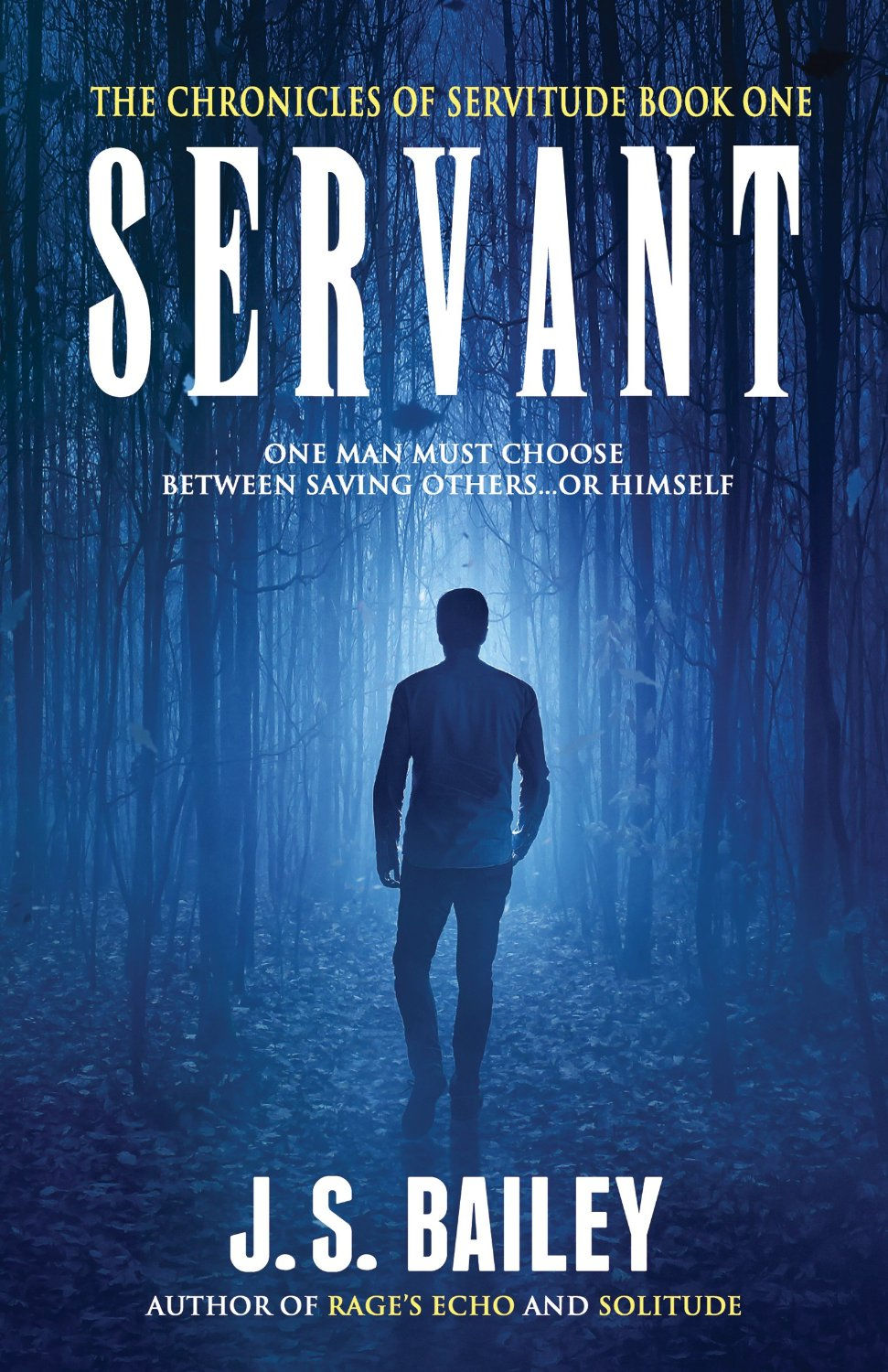
Bailey: At this time, I have plans for three novels in addition to short stories that tie into the books. Bobby Roland will be the central character in these novels, but in the future I may write other Chronicles of Servitude novels that focus on other characters. Only time will tell!
Brown: Who, if any, was the hardest character to discover? What was that process like?
Bailey: Lupe Sanchez will be seen by some as an unlikable character. Her overwhelming fear leads her to betray the one she loves, and she is often caught in the grip of self-loathing over what she has done. It was an effort on my part to make her relatable to readers. Her character shows that there is always hope even if we have failed miserably and live in shame because of it.
Brown: Who is your favorite character and why?
Bailey: Bobby Roland! He’s the embodiment of my own social awkwardness and my desire to do what is right. His character has the potential to grow so much throughout this series, and I look forward to taking the journey with him!
Brown: Who is your least favorite character and why?
Bailey: I’m not a fan of Jack Willard, who makes an appearance toward the end of Servant. He is arrogant, callous, and flat-out mean. Readers will learn much more about Jack in Sacrifice, Book 2 of The Chronicles of Servitude.
Brown: What's your advice to up-and-coming writers?
Bailey: Keep writing! Learn how to bring a story to its conclusion. Get objective feedback. Know what story structure is. Remember that characters should grow in some way throughout the course of the story.
Brown: I read a recent review of a different book by a reader who hates cliffhangers at the end of a series. They view it as a cheap and blatant attempt to sell the rest of the books in the series. As a reader, I disagreed with the reviewer. I love a good cliffhanger because it leaves me to speculate (sometimes wildly) about the next book. What is your opinion on cliffhangers?
Bailey: As a suspense novelist, I have to make sure that the reader is kept in suspense. Right? This involves prolonging tension by not resolving things too soon for the characters. In a series that is tied together with an overarching storyline, it is important to keep some loose ends untied so they might be resolved in a subsequent novel or even the end of the series.
Yes, the main conflict in Servant is resolved at the end, but it was necessary to let the reader know that the show isn’t over yet by ending it on a cliffhanger.
Brown: From first draft to release date, how long did the whole writing and publishing process take?
Bailey: I picked around at early (failed) versions of Servant three or four years ago and set it all aside in frustration. I began writing the rough draft of the final version in January 2013 and finished it five months later. Then for the next year I took a hatchet to it and, with the help of beta readers and an editor, whittled the story down to what it is today. Servant was released in November 2014.
Brown: You have a reputation for being the queen of book signing. Any advice you'd like to impart to aspiring authors about marketing and book signing?

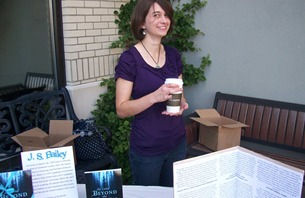
Bailey: Ooh, I have a reputation? ;) It is true that I have many book signings. I try to set up at least two per month. I’ll call local cafes and bagel shops and ask if they would be willing to host an author event. If they decline, I politely thank them for their time and move along. If they accept, we set up a date and I drop off a poster about the event a few weeks in advance. On the day of the signing I set up a table and arrange my books on it; then I greet people as they come in. (99.9% of the people have no idea who I am since I’m still basically a newbie.) If they act interested in my display, I ask if they’re a reader and if so, what they like to read. It’s important to get a conversation going!
I usually sell about five or so books per signing. The reason I have them is because I sell very few books online and being out in public with my books is one way to spread the word about them. An author cannot be successful without readers, and since readers aren’t going to come to me (since I am new and unheard of), I go to the readers.
BE NICE TO PEOPLE. I cannot stress this enough. I’ve heard too many stories about authors behaving badly online and in person. If you want to be treated as a professional, you have to treat others with respect. So no public temper tantrums if your book isn’t selling well. No rude words to people who pass your book by. Your book is not for everyone. It’s okay if they don’t want to read it.
Brown: Any advice to indie writers on a budget?
Bailey: I’d say only pay for the things that you absolutely need, like editing, formatting, and cover design. You do not need a book trailer. It’s not necessary to do a giant giveaway in honor of your book’s release. You do need an online presence, and sites such as Blogger, Twitter, and Facebook are free.
Brown: In your opinion, what's the most fulfilling and satisfying aspect of being a Creative?
Bailey: The best part is when readers love my stories and connect with the characters. Creating stories is fun in itself (on some days!), and sharing them with others who have the same passion for them is even better.
Brown: And on the other side of that, what's the worst part of being a Creative?
Bailey: I’ve always had difficulty coming up with new ideas for stories. For me, planning and writing a novel takes years because of this. I’m constantly experimenting and scrapping stories that aren’t original and just don’t work.
Brown: What, in your opinion, constitutes a successful writer?
Bailey: That depends on one’s definition of success. If your goal is to write a novel every year and you do that, then you’re a success. If your goal is to sell 10,000 copies and you do that, you’re a success. Whether or not the world thinks you’re a success is another thing entirely, but we shouldn’t worry about what they think. ;)
Brown: What do you think it takes to be a successful writer?
Bailey: Perseverance! You will never succeed if you throw in the towel and quit.
J.S. Bailey, thank you so much for taking the time to answer a fan's questions. I hope we can see you back with the next installment in the Servitude series! Best of luck in your future endeavors. We look forward to devouring your next book!


Comments